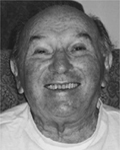
KARL LITTNER
My Stories:
CHILDHOOD MEMORIES IN POLAND-1930S
STRANGE COINCIDENCES OR JUST BUBBE MAYSES?
PASSOVER AT GRANDMA'S OSWIECIM, POLAND IN THE 1930S
I was born on January 15, 1924 Oswiecim-Oshpitzin-Auschwitz, Poland and I lived there for 15 happy years until 1939 when World War II started, and then my life became endangered. I was imprisoned in various forced labor and concentration camps. By a miracle, I survived the camps. In 1945, after the Liberation I started a new life: I got married had two children, but then in 1978 my wife of 31 years died of cancer. I survived that loss again, and married two years later. My children are now adults and at 78 I am a happy senior citizen, living in California, USA.
<<< back to top
CHILDHOOD MEMORIES IN POLAND-1930S
Each day, when I returned home from school, I stopped off first my grandparents'house to find that Grandma had prepared an afternoon snack for me: the heel of a rye bread with caraway seeds, spread with fresh, homemade butter. The taste of the butter on that fresh rye bread made my mouth water. I liked it so much, that on my way to the Heder (the Jewish school), I ate it all.
This became my daily routine. After Heder I went home to do my public school homework and helped Mother with her chores. Since having a goiter surgery my mother was not well and needed my help. Mother was a fastidious person and was always cleaning or washing something. Rembiesa, the landlord would joke, "Ms. Littner is washing the paint off the windows and doors."
To prevent Mother from doing hard work, I scrubbed the wooden floor on my knees with a hand brush, started the fire in the oven on cold mornings, and cleaned the brass and steel parts on the oven after it was used for baking challas, cakes, goose, duck, or chicken. On Sundays, Father had his day off. He came home from his shop in Katowice.
Every week we went together to bathe in the Jewish public bathing facility located in the city center, near the big temple. During my early childhood, Mother heated water in a big pot on the stove and used it to bathe us in a wooden laundry tub. First she bathed Fela and then I was next.
In the summer we swam and bathed in the river Sola. We tied the soap to a string to keep from losing it in the rapidly moving river. We sunned on the rockstrewn beaches, played hide and. seek in the bushes lining the shore, and swam in the fast-moving rapids. We had lots of fun and forgot that we were getting sunburned.
One Sunday, Uncle Elek took his work horses to the river to bathe and encouraged us kids to ride the heavy Belgian horses without a saddle, holding on for life to the horses' beige manes. Our short legs did not do us any goodÑthey were too short to hold on to the horses' torso. The horses, feeling the river, bolted and started to gallop, enjoying the extensive open pastures, and scaring us children to death. After reaching the river, the horses laid down in the water, throwing us fully clothed, into the river.
The extensive pastures were on one side of the river Sola, the city park was on the other side, and surrounding us, were fields of rye, wheat, potatoes and beets. The great outdoors was our playground; we would run around barefoot, stepping in every rain puddle we could find. We ran through pastures filled with grazing cows and flew kites between them.
While looking up at our kites, we stepped, barefoot in the many freshly-deposited warm cow cakes hidden by the grass. Feeling the warn dung oozing between our toes, we forgot the kites for the moment and ran speedily to the river to wash up. Those were the simple pleasures of life, the closeness of family life, which helped us to develop strong mentally, and helped me later to better cope with life's future tribulations.
<<< back to top
Uncle Elek was a very strong man and used his strength to solve arising problems instead of avoiding them. Grandfather disapproved of his behavior. It was not becoming for a Jewish boy from a respected family to use his strength to solve problems.
Elek did not look for problems; but if any came his way he knew how to solve them. Elek used his strength discriminately -only if somebody was in his way. He was proud of his ability to knock out anybody with one left punch.
On one occasion, a circus came to town and Uncle Elek took me to see the circus performance. I was about 7 years old. While I was enjoying the clowns and the acrobats, the circus announcer introduced a professional boxer who was looking through the audience for a volunteer to oppose the circus professional in a boxing match. For winning the match the challenger would get a reward of 100 zloty.
From the thousands of people in the audience, the only one to volunteer was my Uncle Elek. He had a stocky build, was of medium height - 5.6 feet high and weighted approximately 205 lb. Because of his heavy build, they could not find large enough trunks for Elek to fight in, so he walked into the ring in his long white underwear.
The commencement of the fight was announced and the professional boxer entered the ring showing off his boxing ability. For a while, he used Elek for a punching bag but only until Elek figured him out. He found an opening and knocked out the professional boxer with one left punch.
It happened so suddenly that the semiconscious circus boxer did not know what happened to him. He was out and they had to carry him out of the ring on a gurney. The circus ringmaster announced that Elek won the contest due to excessive physical strength, and for his effort received 100 zlotys.
Many months later, Elek was delivering coal to a customer's house on Jagielonska Street in Oswiecim; which was one of the main streets. On that street, was the post office, a bank, some private and religious high schools and on both sides residential villas lined the street.
From far away, from the area of the post office, Elek noticed a tall man running in his direction. He was holding an attache case in his left and in his outstretched right hand he was holding a knife. Elek reacted instantly to what he saw and to be ready for the running man, he got out his pocketknife and held it in his right hand. Elek moved toward the center of the street and stretched out his arms, trying to block the escapee's way.
He assumed that this man running away from the bank followed by police and many people must be a thief or a bank robber. As the man came closer, watching the knife in Elek's raised right hand, he missed Elek's left hand, which knocked him out cold with one punch. He fell into the open gutter by the road, bleeding from his nose, mouth and ears. Shortly after the police arrived to arrest the man who was still lying in the gutter, unconscious, unable to move, bleeding from his mouth, oblivious to what was happening around him.
Many months later, one Saturday morning when Elek and I were returning from the Shul we stopped by the bakery to take home the cholent, which was a part of our Sabbath dinner. (Cholent is something you put in the baker's oven on Friday evening raw and take it out on Saturday morning, cooked, and ready to eat.)
Outside the door Grandma was waiting for us, holding an official letter in her hand, which she handed to her son Elek. It was a letter from the Polish government in Warsaw thanking Elek for apprehending a notorious thief and bankbook forger and contained a 100 zloty reward. Elek showed off his letter and the 100 zloty reward to everyone in town, bragging that he received it for one left hand punch.
Before the start of World War II in Oswiecim, in the years 1936-1939 we had three policemen to serve and protect the entire population. One of the policemen for no known reason, frequently harassed and discriminated against the Jewish citizens in Oswiecim. His unsavory antics soon became known all over town and eventually news of them reached Uncle Elek.
Elek, without disclosing his intentions to anyone, decided to do something about this situation. Complaining to the authorities about him would not do any good and would not solve any problems, especially problems concerning Jews. Suddenly this anti-Semitic policeman, to the delight of the Jewish people in town was no longer serving his beat.
He disappeared mysteriously and nobody knew what happened to him or where he was. Some weeks later he resumed his duty, but a changed man. Instead of harassing Jews, he avoided them wherever he could. No one knew what to ascribe this sudden change to, but I had a suspicion about what had changed this policeman, but it was only a suspicion that I kept to myself.
About a year or so later, Uncle Elek disclosed to me in detail the whole story of what has happened: Elek had been looking for the policeman for a long time. Then one day the occasion arose and he got close to the policemen without being seen by him or anybody else. Because the policeman knew my Uncle Elek's reputation; he avoided being seen by him.
Elek waited for the right time and when the occasion arose he hid behind a house door located on the policemen's beat. Looking through a crack in the door, Elek noticed the policeman nearing his hideout. When he reached the gate behind which Elek was hiding, the gate opened. Suddenly a punch followed and knocked the unsuspecting policeman out cold. The single punch made him see stars in his eyes. Elek pulled him inside the gate; more punches followed, and he left the half conscious policeman behind the closed gate.
Many young Jewish draftees were afraid to serve in the Polish army and tried to avoid it if they could. They tried to lose weight, get sick, or induce eye problems. The army postponed the draft until the draftees got tired of avoiding it. The Jewish draftees were afraid of the harassment dealt out by the Polish and Ukrainian instructors, making fun of the Jewish recruits.
They cut their hair and forced them to eat pork. Not Uncle Elek -he was not afraid; when called to serve he joined the army without reservations. For basic training he was sent to the Ukraine, a place known to be more anti-Semitic than any other place in Poland. In the beginning all went fine, Elek followed orders like any other soldier, trying to be as good as the others.
Once during the daily exercises, the sergeant singled him out and without provocation, slapped Elek's face. Elek, standing at attention calmly asked the Sergeant; whether hitting is allowed in the Polish Army. And when the Sergeant answered yes, Elek obliged and hit the sergeant once, knocking him out cold.
Elek was jailed for what he did and after a week he was brought before the Major to be sentenced for his deed. The Major asked Elek to explain what happened that day. Elek emphasized that he had asked the Sergeant if hitting is allowed in the Polish Army? "The Sergeant said yes, and I hit him."
The Major must have liked Elek's reasoning and made him his personal assistant. Elek was liked in the Major's household; he dined with them, went hunting with the Major and shopping with the Major's wife. He enjoyed serving in the army and did not agree with those who were afraid of serving.
P.S. Elek died of typhoid after the "evacuation" from K.Z. Birkenau, to Reichenbach, where too many people from different camps gathered in a small area. The existing unsanitary conditions caused the lice to multiply into millions, bringing on the typhoid epidemic that killed thousands of Jewish prisoners, with Elek among them. This happened January 1945, during the advancement of the Russian Army, shortly before the liberation.
<<< back to top
STRANGE COINCIDENCES OR JUST BUBBE MAYSES?
At the age of 13, I finished Public School, and had my Bar Mitzvah in Grandfather's Shul. He made sure that I knew my Haftora, and was very proud that I did. It was winter of 1937.
About a year later, my grandfather lost his bout with liver cancer. Grandfather Akiba Enoch was very dear to me and also helped so many others. He died in his home after a four years of prolonged suffering, surrounded by his large family. He died in peace and should rest in peace. The Germans had no chance to kill him too.
At the corner where my grandfather's street met the main road, there had grown, for many years, a small birch tree. Any time Grandfather had some spare time, he walked, using his cane, to the street comer, leaned against the birch tree, lowered his hand over his eyes to keep the sun out and rested while watching the horse and buggy traffic go by.
During the four years Grandfather was sick he could no longer visit his favorite tree. One day, shortly before his death, he must have felt a little better because he walked one more time to lean against his favorite birch tree.
Returning from school, I, to my surprise, saw Grandfather leaning against the birch tree. I walked home with him and shortly thereafter my grandfather passed away.
After his passing, the birch tree dried up. This story is factual, I can attest to that. In my time, I saw the birch tree wilted and leafless. Is this a coincidence or a bubbe mayse (old wivesÕ tale), or what?
Another Bubbe Mayse? In my youth, I witnessed what happened in the following story: It took place in the Zasole part of Oswiecim. Up the street, about 500 meters from my grandparent's house, where the two streets met at the comer, stood the big brick house belonging to the Icek Bands family. Here is where this story happened.
Downstairs, facing both streets, was a small mom-and-pop grocery store. Leading up to the store entrance, were eight to ten stairs. Grandma often sent me there to buy some groceries. Every time I went upstairs, I saw a young Pole on crutches, standing near the steps. There was something wrong with his foot, below his knee.
My childish curiosity moved me to find out what had happened to him. An elderly Jew called Sahenuty (mityn krymyn kop) had from birth, kept his head to the side, resting on his left shoulder. I saw Sahenute many times before. He frequented the store trying to sell the paper bags that he glued himself, to the small groceries in town. Sahenuty came often, and every time, the then-healthy Polack, for no reason, kicked the frail old Jew Salienuty.
One day, a bystander noticed the unprovoked assault on Sahenuty. Angered and offended, he told the assaulting Polack; "Your foot should rot away. Why are you kicking this poor old man?" The Pole was on crutches in the years I saw him, and kept his foot off the ground because it was rotting away below knee, and the rot was creeping up. It was explained to me, that he kicked Sahenuty, now his foot rotting away. To me, this story is a fact, but to you it may be a bubbe mayse?
<<< back to top
The S.S. were dividing us into two groups. My friend, Wrumek desperately hung on and tried to follow me to the right, but despite his objections he was forcefully and with the help of a club shoved to the left. That was the last time I saw Wrumek disappearing with a bunch of older men women and children who were being herded toward the waiting trucks.
We didn't have a chance even to say good-bye. Wrumek was only 14 when he was loaded with other unfortunate souls onto the waiting trucks. I was showed to the right to join a slowly growing group of newly selected arrivals. The trucks were leaving full of people; men and women, old and young, children of all ages, educated and not, all from the left group, then soon returning empty for more people, continuously supplying the crematoriums with more victims.
Minutes later, in the distance we could see the tall crematorium chimneys spewing white smoke. They spewed smoke by day and fire by night, around the clock they were killing, gassing and burning thousands of men, women, young, old and children. Affixed to the chimneys were signs reading: "Es gibt ein weg zu Freiheit" ("There is a way to freedom.") Their souls left this world with the smoke of the chimneys, caused by the burning of thousands of healthy and happy human beings. The stench of burned human flesh permeated the whole camp area day and night, 24 hours a day.
I still feel the smell in my nostrils, reminding me of their cruel death and the destruction of my whole family and my forefathers, and millions of others unknown to me. The stench of burned humans' flesh made the birds leave the camp area.
In meantime, my group on the right was slowly growing bigger, waiting for more candidates selected by the S.S. Finally, there was no group on the standing on left, as soon as people assembled, they were loaded onto trucks and minutes later they were efficiently processed by being (gassed and killed) then burned, thousands disappeared in minutes, coming out to freedom in the chimney smoke. That was the fallacious meaning of words written on those chimneys signs. The S.S placed the same signs on the camp gates through which thousands of people walked in, but never left. The only way "to freedom" were the crematorium chimneys, and the stench of burned flesh attested to it.
Late in the afternoon the train and the loading ramp in Birkenau was empty, the processing of human beings was, as usual very efficient, even the piles of suitcases, bedding and piles of dead babies were all gone, awaiting the next train full of victims to arrive. The S.S. prided themselves that in Birkenau they could "process"-gas and burn l00, 000 Jews every day.
In the meantime our selected group on the right grew slowly to several thousand or more people. The S. S. men left us standing in the open for hours, the full sun burning down on us without mercy, no food or drink. We just stood there not knowing what punishment we would be subjected to next.
No one cared if we needed to use a restroom, have a drink or some protection from the sun, but we soon realized we better not ask. Having no choice, people were urinating where they stood. Without the necessities of life, we were becoming desperate and agitated. After being selected to go "right," we stood for hours in the open, exposed to the merciless September sunrays.
Finally in the late afternoon, the S.S. herded us into an empty "processing" barrack, one in the sea of thousands of barracks (stables for horses) in AushwitzBirkenau, Vemichtungs (Destruction) Lager. Under the threat of death we were ordered to undress and drop all our clothes, including shoes to the floor. "Anybody trying to save something on or in him will be shot!" shouted the S.S. men, using clubs and other murder instruments to assert their authority.
They pushed themselves, through the naked humans killing and maiming those standing in their way, scared, and confused masses of victims. In minutes the S.S. men and other henchmen turned us into nameless "zombies," "initiating" us to the annihilating life in Birkenau.
The name I was known by for 15 years until now, September 1943 together with my identity, dignity, and independence, and my freedom too, was lost with the clothes dropped to the floor. I was left standing naked and alone between thousands of naked unfriendly bodies in the same predicament. My birth name was replaced by, on my left forearm, a tattooed number 134626. From now on this number became my only important name,"Remember it or die," shouted the S.S. murderers.
The S.S. kept us standing on the barrack's cold earthen floor, degraded, naked, young and old, educated, and not, orthodox, and reformed, fathers, grandfathers and children, confused, scared and afraid of what the S.S. men would do to us the next minute. Who will be clubbed crippled, punished, shot or beaten to death?
Shots were ringing out continuously, and some people, who undaunted by their warnings, made a wrong move or tried to save on their bodies a gold coin or something else valuable, were dropping, shot dead around me. No one knew under what pretext he would be shot or otherwise lose his life. The only thing the S.S., the Capos and other henchmen could not take away from us yet, were our thoughts we still had, and they could not, control them, for the time being.
The thought of loosing my whole extended family, and the home life I knew, occupied mine. At that moment I realized the frailty of my life and I was wondering how much punishment I would have to endure until the end of my life too.
I was just a short walk away from my home at Oswiecim-Zasole, where I was born, grew up, got my education, and lived with my whole family for fifteen years. My faith took a sudden turn, and I was now imprisoned in a Koncentration Camp, solely for being a Jew, 15 years of age and with no chance of survival.
The existing inhumane "living" conditions in K.Z. AuschwitzBirkenau Vernichtunglager, the daily starvation rations, the damaging random beatings, time and time again, on head and body made me worry that I might lose the last possession I owned, my memory.
I worried I might forget everything important, like who am I? What is the date of my birth? I might forget the 15 years of my childhood, my parents, grandparents and my grandfather's brown picture I remembered so well.
Despite the life threatening consequences, I separated from the group standing in the sun and started running toward a place where I had previously seen some water holes.
I urgently needed a drink no matter what the risk of getting killed. With a little luck, I made it to the hole, thirsty and dehydrated. I jumped into the deep and muddy water hole, found myself swimming, drinking myself full, and jumped out soaking wet, water dripping from my clothing.
Lucky again that no one of the S.S. henchmen or cruel Capos saw me. It would be my last life undertaking, my last drink. Running back, I soon realized that this could also have been my last run, ending my short-lived career; it was more than lucky, that no one saw me.
Realizing I was in K.Z. Birkenau, and witnessing that many people were getting shot for a lesser offenses than mine, I was glad that luck was this time was on my side, and how serious my situation could have been. I would not dare to repeat another deadly undertaking like this even if my life would depend on it.
I sneaked back into the line in my wet clothes, scared, standing just a mile away from my birthplace in Oswiecim under the threat of death. For short fifteen years I lived my happy life in Oswiecim, with my sister, my parents, grandparents and the whole extended family and friends. I played and I attended school. Now barely 15, I am so close but so far away from the life I knew, and all alone, realizing that at this moment my life is not worth an "empty eggshell."
<<< back to top
My grandfather, Akiba had two brothers and one sister. They lived in Oswiecim. The three brothers operated a leather processing plant using their hands and physical power to turn rawhides into hard leather used for shoe soles. They worked very hard to make a living and decided to send Akiba, the youngest brother to America to explore the possibility of an easier life.
It was around 1910 when Akiba traveled to America, leaving his wife with five children behind in Poland. After his arrival in the States, he settled in Chicago, working hard to support himself and send some money to his family in Poland.
From the outset, he did not like the conditions in Chicago and considered returning home to Poland as soon as possible to enjoy his growing family and work again with his brothers. But by the time he accumulated enough money to do so, the year was 1914 and the First World War had started, halting his travel plans at least for the duration of the war.
In 1918 the First World War ended and by 1920, Akiba Enoch was ready to return home to his family in Oswiecim, Poland. He never said a word about his American experiences, but must have confided some of the experiences to his brothers.
After his return from America, the brothers sold the leather tannery and each brother started his own new business venture. Akiba went into selling coal and transporting goods; Wolf went into steel-hardware business and Jacob into the wine and spirits business.
When I about 7, I saw, in Grandma's house, a postcard size brown (sepia-tone) picture of my grandfather made during his stay in Chicago, and the picture stuck in my memory forever. I can only assume that after Akiba returned home from America, he gave each of his brothers one of the brown-hued pictures of him.
In 1921 the youngest brother Jacob died, and his widow sold the wine business and emigrated with her children to what was then called Palestine. In 1970, after she had passed away, her family was looking through some old family pictures and found my grandfatherÕs brown picture.
Not knowing who it was, they gave the picture to my cousin while she was visiting Israel. Sometime later, I spoke to Cousen Fela (Wolf's granddaughter) on the phone, asking her about her last trip. Describing Israel to me, she told me that she brought back some old family pictures.
That brought me back to my childhood and the brown picture of my grandfather from America that I saw then and still so vividly remember. I began describing it in detail. Before I finished, she interrupted me and said, "I have this picture." (Her grandfather Wolf Jacob and my grandfather Akiba were brothers). "The relatives in Israel gave it to me asking, ÔWho is this?Õ"
To make sure, I continued my description but she assured me that this was the picture and promised to send a copy so I could see for myself. I could not believe that a picture I saw 70 years ago would still mean so much to me. Going through Birkenau, Vernichtungs Lager I could not save a needle, much less a picture.
My dignity, all my documents, my birth certificate, my name and my whole family and the life as I knew it, all ended in a moment of time. The inhumane conditions, the hunger and the random damaging beatings, sometimes over the head, made me worry that I would be unable to remember my name, my birth date, my grandfatherÕs brown picture, and who I am.
In the 1930s, when I was a 6-year-old child, we did not make too many photographs; but the ones I saw, including my grandfather's brown picture, I never forgot; it was imprinted in my memory forever.
With the passing of my only sister, Fela on March 8, 2001, who resided in Melbourne, Australia, my nephew Charles sent me some family pictures to identify. The pictures were of our mother, Miriam's family. I had no idea they existed and my sister had never told me that she had them. The pictures were of our Grandpa and Grandma Enoch, their sons, Elias and Jacob with their wives, Genia and Bertha and GeniaÕs and JacobÕs three children. There was also my mother's maiden picture.
All the people in these pictures perished during World War II between 1939-1945. It hurts when I look at them, but that's all I have. Now, at age 78 my family collection of pictures have increased considerably from one to a few. I had never dreamed of ever seeing those pictures; I had not even known they exist.
<<< back to top
As my parents, grandparents, and the birth records kept at that time by a Jewish record keeper told me, I was born to my newlywed parents, Elias and Maria Littner-Enoch, on a freezing day on Tuesday January, 15, 1924. It happened in Grandma's warm kitchen, the only warm kitchen in town. The experienced midwife used the entire amount of prepared warm water to assist in my birth.
Oswiecim, the city where I was born, was called Oshpicin in Yiddish. The city was located in Southern Poland, not far from the Czech and German borders. Oswiecim was a small, obscure peaceful city of 15,000. Not many in Poland knew of its existence. Most of the residents of Oswiecim were Roman Catholic, and a small percentage was Greek Catholic. About a third of the total population in Oshpicin was Jewish. The Jews of Oshpicin were Orthodox, followers of various rabbis from Bobova, Sandz, Trzebinia, and Gera.
The so-called German Jews attended the Temple on Sabbath and holidays. They were traditionally observant, but they shaved, wore modern clothes, and kept a kosher house. Extensive pastures, fields of rye, wheat, potatoes, beets, and many small farm villages surrounded our city. Some Jewish city dwellers, in addition to their business ventures, maintained small farms that adjoined their living quarters. Before the First World War of 1914-1918 the whole Southern area of Poland, extending from Oswiecim to Lemberg in the north, was occupied by the Austro-Hungarian Empire, and was called Galicia. (The Jewish residents of Galicia were called Galicianer). The Russians occupied the remanding parts of Poland until the end of World War One. The Beginning of K.Z.Lager Auschwitz-Birkenau.
The unannounced Second World War started on September 1, 1939. Germany overran Poland against much resistance, and began victimizing the Jewish population of Poland. The encroaching German Forces overran Oswiecim that same day, and shortly thereafter changed the name Oswiecim, to AUSCHWITZ. The proximity of the Polish Army military camp and the rails to the adjoining Birkenau village made the area perfect for their plans. In a hurry, the Germans created the Aushwitz-Birkenau Killing Camps, to start eliminating the undesired elements, the Jews. The German Sonderdienst and the SS turned the nearby Aushwitz-Birkenau into the best-known killing camps in Europe and the entire world.
Then the Germans started to take care of the Jewish population of my area, Zasole, and moved us to live with the Jews in town. Because of the proximity of the Killing Camp, the Zasole neighborhood was turned into a large open space. Eventually the Germans moved all the Jews from Oswiecim to an adjoining city. They erased the village of Brzezinka and resettled the Polish farmers into the residences previously occupied by the Oswiecim Jews who were later liquidated by the German SS. On the extensive empty fields, the Germans erected hundreds of prefabricated barracks built for horse stables, complete with enameled signs stating so.
The SS also changed the name of Brzezinka to Birkenau, and incorporated it with K.Z.Lager Auschwitz. The two became known as K.Z. Auschwitz-Birkenau. In the vicinity of Aushwitz the SS established several Sub-Camps, in which thousands of haftlinge worked, and died. Not far from the Aushwitz-Birkenau Rail Station, connected by a rail and gravel access road, stood a tall and large building. This had formerly belonged to the Polish Tobacco Monopoly. The Germans incorporated this building into the Camps, extending its rails to the previously constructed unloading ramp near the crematoriums of K.Z. Birkenau. No one ever traveled back from here-Birkenau was the final destination.
Arriving victims were proded to leave the wagons and jump down to the low ramp. Polish trains that formerly delivered tobacco from Turkey, Macedonia, and from all over the world, were now utilized to bring trainloads of Jewish families and other victims to K.Z. Birkenau to be "Processed," that is, starved, dehumanized, harassed gazed, killed, and burned in Aushwitz-Birkenau Crematoriums. If there was any human fat left dripping from the ovens, it was used in the manufacturing of "REEF" soap, sold to the German population outside the Camps.
When the German SS closed down the production of cigarettes in the building belonging to the Polish Tobacco Monopoly and utilized the building and its inventory for their own purpose, the Poles kept silent and didn't object, knowing what would await the Jews. The train tracks from the Monopoly building extended into the center of Aushwitz-Birkenau Vernichtungs Lager and became busy, day and night. Polish trains operated by Polish engineers, the "Fablok" (Name of the Polish Locomotive Factory) steam locomotive huffing, and puffing, delivering uninterrupted transports of cattle wagons filled with thousands of Jewish families, to be victimized by the cruel SS men before their demise.
On their arrival, the loud unlocking of the wagons' steel locks deafened the bewildered people. Herded like cattle, accompanied by shouts, they were forced to jump from the wagon to the ramp. Standing on both sides of the open wagon door were the SS, who clubbed those coming out of the wagons, making them drop whatever they were holding in their hands. The minute the transports arrived, the so-called "processing" began. The specially created noises and wild shouts scared confused, and bewildered the arrivals. Herded like animals they pushed them toward the "selecting SS" henchmen. Quickly, and with the help of clubs, the SS Officers assorted them, deciding who should go left or right, who should die now or suffer and die later. Thousands of elderly and children were herded onto awaiting trucks, which brought them to the gas chamber. Minutes later, the majority of the newly-arrived Jews were dead and became a steady supply for burning in the ovens of Birkenau Crematoriums. To dispose of the gassed and killed humans, the crematoriums burned non-stop 24 hours a day, creating mounds of ash that were spread over the Birkenau fields.
Even today, the Polish residents of that area are still looking for Jewish gold (from teeth) in the Birkenau fields. From afar you could see the tall crematorium chimneys continuously spewing smoke by day, and fire by night, enveloping the whole Camp and nearby city with the smell of burning human flesh. The Germans built the Vernichtungs Lager Birkenau exclusively to "Solve the Jewish Question" (Loehsung der Juden Frage), to eradicate the Jewish "race" once, and for all. The German Nazi SS, helped by Capos and Camp prisoners, gassed and burned thousands of Jews and other people in K.Z. Auschwitz-Birkenau, Dahau, Buchenwald, and other extermination Camps. The civilian population living and working in the vicinity of Aushwitz-Birkenau knew and saw what was going on inside the Camp, but very few, if any objected to the killing and burning of human beings, especially Jews. Day and night the crematorium chimneys spewed smoke and flames from the burning of human flesh. A fog-like smoke cloud was always present over the surrounding residential neighborhoods and could hardly be ignored. The smell of burned flesh permeated the whole area.
<<< back to top
The swift running River Sola had its beginnings in the Beskid-Tatra Mountains, and ran through the middle of the city, parting Oswiecim into the city section and Zasole. Sola was a tributary of the Vistula River that runs the length of Poland, and drains into the Baltic Sea. Oswiecim city was 105 meters above sea level, while Zasole was at, or a couple feet below sea level, making it prone to seasonal floods. Severe storms and heavy downpours several times each year made the fast running mountain River Sola leave its banks, flooding the large grassy flood plains alongside it. Often the floodwaters reached nearly the top of the dikes, threatening to spill over. One more inch of water, and the whole Zasole area would be in great danger of being under water. The man-made earthen dikes stretching for miles along the river miraculously prevented disaster. Flood after flood, for hundreds of years, the earthen dikes held back the angry fast-running river from spilling over them, saving the low-lying Zasole neighborhood.
Early Memories At the age of three I became more aware of events happening around me, and I began forming memories that despite the threatening experiences later in my young life, remain in my memory today. I recall my early childhood well, a childhood spend close to my parents, grandparents, uncles, and aunts. Mother was always around to protect me, making me feel warm, safe, and secure.
I remember well that Mother's whole family was very instrumental in my upbringing, which contributed a lot to the development of my mental strength. I felt always protected, and cared for, I felt wanted, I was always welcome at home, and around my family. In 1931 at the age of seven, I began to attend Public School. The principal was Mr.Skarbek. His brother, Skarbek was the Priest in the adjoining Catholic Church. As long I can remember I spoke only Polish. I learned to speak Polish as well or better than some of my Polish compatriots. So as not to antagonize their Polish neighbors, most of the Oswiecim Jews including the Orthodox ones spoke Polish in addition to any other language they knew. Being close to the German border (three miles), and having been previously occupied by the Austro-Hungarian Empire, most of the older Jewish folks spoke German very well. (Hoch Deutsch).
The Jewish minority students in Public School were good learners and ahead of their class. They progressed yearly to higher grades, some even skipping a grade. I did not experience any official or unofficial discrimination during the seven years of attending Public School. In the predominantly Catholic Public School the morning classes started with reciting prayers. Out of respect to our Catholic friends, the Jewish students always stood up during the reciting of Catholic prayers. Once a week we studied religion, and two classes got together to be separated into a Catholic and a Jewish group. We were taught religion respectively by a Priest, or a Jewish Professor. We studied Jewish History from a book by Dr. Meyer Balaban, and after school, I studied Talmud (bible) in a heder (Room) and learned the Hebrew Text, In 1936 I was in the 6th grade.
Our teacher, Ms. Dubielowa requested that during the winter school break all the students write a composition, on the subject of their choice. I thought about it for a while, and decided to compose a story about the "Christmas Holidays." I wrote in detail about its customs and traditions, first describing the reasons for celebrating the Christmas Holiday. I described all the new and old customs and the required preparations. I also described an old, not to well-known custom that requires placing some straw on the holiday feast table before it is covered with the holiday tablecloth. I also named all the necessary ingredients needed to prepare the customary foods, and the time it takes to make them. I even described how to make eggnog and other drinks that are traditionally served on Christmas Night. (Boze Narodzenie) -- God is Born.
After the winter vacation was over we returned to class to start the new sixth grade semester. One by one, we read our compositions to the teacher. At the end, she collected them for grading. Our studies continued as usual, five days a week, interrupted only by very cold winter temperatures of 20 C. below 0. Because of severe cold weather, the coal fired potbelly ovens could not keep the classrooms warm enough for us to be able to attend. We returned to class when the weather warmed up to at least 15 degrees C. Returning to class again, the teacher surprised me by selecting my "Christmas Holiday" composition to be read by me to the majority of Christian students in class.
When I was 12 , there were only one or two cars in the whole city of Oswiecim. One belonged to the owners of a Brewery-Liquor Distillery, and the other car belonged to the official city Medical Doctor. In the Zasole neighborhood where half of the Oswiecim population lived, there were hardly any phones. One or two telephones could be found at some selected businesses. To use them we had to reserve a time and wait there to receive the call. We had electricity to light our houses, but no refrigerators, not even ice boxes; we did not even know they existed.
<<< back to top
On January 1, 1945, in the height of the winter cold, we left Funfteichen on a prolonged death march, with the snow reaching up to our knees. Sparsely dressed and freezing, the falling snow stuck to our ill-fitting Dutch wooden clogs, making it hard to walk. Numbed by cold, my naked feet were frozen. We walked through deserted fields non-stop, from sunrise to sundown. By nightfall the SS usually looked for a farm with a barn large enough for all of us to fit in, and there we would spend the night in the straw. Those who survived the cold night assembled outside in the morning, received a small ration of bread, and left the farm for another long day of walking in the severe cold.
To make sure that everybody was out of the barn each morning, the SS brought in vicious dogs, and let them loose in the barn to sniff out people hidden in the top stack of bales of straw. With loud snarls and barks, the dogs announced that they found someone hiding. Holding on to the victims with their teeth, they pulled out Russian prisoners hiding in the straw. One by one, the dogs dragged them outside toward the SS waiting with their Lugor pistols, ready to shoot.
The SS walked the violators outside the barn and shot them in the neck. It was a hard sight hard to bear for a twenty year old, watching people I knew shot through the neck, their blood mixed with their brains oozing through the bullet exit hole in their foreheads. They emitted wolf-like sounds while falling face down, dead to the ground. These penetrating sounds, and gruesome sights are still imbedded in my soul, and my sleeping mind, and after decades still awaken me at night.
Underneath the large straw-filled barn was a basement used to store farm products for the winter, for unloading farm products and for ventilation. The basement was only accessible through small openings inside the barn. One of the SS guards asked me to go down through an opening, and see if anybody was hiding down there. It was too deep to go down without a ladder, so the SS guard asked me to hold on to his extended rifle, while he lowered me down.
The basement was large, and lacking outside windows, it was very dark. I moved forward out of sight, and stood there for a while worrying that if somebody was hiding there, he might kill me to save himself. Pretending to look around, I stood back in the dark biding my time, shaking from fright. After a while I called to the SS guard to lower his rifle, and pull me back up. I was thinking, what will happen if the SS guard goes down himself, and finds somebody hiding? He will kill me on the spot.
Luckily, he did not go down, maybe he was too scared and that was why he had sent me first. After the shooting, and killing of so many people, the whole column set to marching and left the farm. The SS held back a few of us, including me, to collect the dead Russians and load them onto a horse drawn buggy which had been sequestered by the SS from the farm. With difficulty the two of us threw one body after another into the wicker-basket buggy, our hands bloodied by the grisly work.
Before long the buggy was filled with 30 or more dead. The loading finished, the SS handed us the daily ration of ersatz bread. Our hands were full of human blood and brain tissue. We had no way to wash up, so although we were starving, we could not eat the bread. Shortly after, the buggy started to move. It was driven by a driver with two horses. The wagon was filled with dead, stacked without caskets with some still clinging to life. This sad procession moved slowly.
Upset by the sight of blood, and the oozing human brains, we kept our heads down as we followed behind the buggy on foot. We left the farm enclosure, and soon we reached the snow covered country road that led in the direction of the previously departed column. Cold, hungry and sickened by all the sight of the wagon, sad faced we followed the grisly contraption, the makeshift hearse, the cadavers stacked on top of each other, without caskets. Heads down we walk behind the wagon, oblivious to the white surroundings.
The whole world seemed white, covered with snow, the frost like diamonds shimmering in the bright sun. The deserted road too was covered with snow; hard to distinguish in the vast emptiness. Besides us, no one was there to see the blood, and brain matter dripping though the wicker wagon, and painting the snow covered road with blotches of red.
We walked as if in a trance behind the procession, staring at the sore looking carriage with its grisly load until suddenly the SS ordered the driver to stop the horses. Beside the road was a deep gully, or gravel pit. The snow was faIling silently, with only the wind disturbing the eeiry quiet of the surroundings. The SS ordered us to throw the dead bodies into the pit. Some of those shot still showed signs of life, as we threw them down one by one as far we could, too weak to throw far. We dropped them over the edge; the gravity did the rest, they rolled down and landed in the snow-covered hole.
The snow kept faIling during the unloading, and by the time we finished the grisly work the dead bodies were gently covered by a white blanket of fresh snow. Laying in between the dead Russians was my oId friend, Nicolas, the one who took part in stealing food from the SS warehouse on Christmas night. The SS sent the driver back to his farm, while we proceeded on our way to catch up with the rest of the column.
By nightfall we finally caught up with the group, which was already situated for the night inside another farm haystack. Hungry, tired, weary and dehydrated, I cannot even remember if I ate the blood-soaked piece of bread, probably not. It was very dark when I entered the already occupied haystack. I held a container filled with melting snow to have a drink after I found my place to rest.
Inside, it was pitch dark; and as I carefully took my first step I was hit with something hard in my face, by someone who wanted my snow-filled container. Bleeding profusely and unable to see in the dark, I bolted aimlessly forward, climbing up the straw until I could not go any further. I found myself under the haystack roof.
Blood streaming down my face, I hoped that I had finally found a quiet place when someone grabbed me asking, "Is that you, Karl? What happened to you?" I was very agitated, and my old friend Tonko tried to calm me down in the dark, assuring me it will be all right. I slept under the roof near Tonko, and in the morning we continued on our death march. The prolonged days of walking were taking a toll on all the people. The continuous cold and starvation left many dying by the roadside.
After walking for two weeks though heavy snows, we arrived outside the city of Weimar in the vicinity of the overfilled K.Z. Lager Buchenwald. Many prisoners marching from other Camps arrived at the same time to Weimar-Buchenwald; but the Camp was already overfilled with no place for the arriving masses. Our depleted group of close to 30,000 men was kept outside for several days, until we were split in half.
One half including my friend, Zylek was sent to K.Z. Northausen. The group I was in was herded toward the back of a train station, and loaded into open coal wagons, accompanied by the shouting SS, and their wild dogs.
<<< back to topÊ
Scared and bewildered, trying to get away from the biting dogs, too many of us were herded into each wagon, with standing room only. The loading accomplished, the train started to roll away.
Because of the overcrowded conditions, I was in danger of being crushed. To prevent that from happening I tried to move slowly and stay close to the the wagon wall to protect my back, and avoid being trampled. I finally succeeded in reaching the table. SS guards were standing on top of it. Wet from the rain, hungry and shaking from cold, I asked the German guard if I could go under the table. He looked at me quizzically, knowing full well that there was not room, but said yes.
I found a narrow place between the table leg, and the wagon wall-a space about 1 foot wide by 2 feet high. I contorted my dilapidated body into that tiny space, and for the rest of the trip I was safe from being elbowed down, and possibly killed. Squished into that narrow place, the rainwater from the SS guards' raincoats came down on me, making me shiver.
After about two weeks of that ordeal near the end of January 1945 the train stopped in the middle of nowhere. Those prisoners who were still alive were ordered to jump down, remove the dead bodies and empty the wagon. We carried the many corpses to the last coal wagon, now loaded in the cadavers and soon the coal wagon was filled to the top.
Then the SS ordered us to sweep out the wagon floor using some makeshift brooms. The wagon floors that had held the cadavers were littered with human excrement and urine. We returned to a now-empty, cleaned out wagon, and put a few pieces of straw on the floor.
Now there was lots of space for the 30 of us who were left out of the several hundred that had boarded the train in Weimar-Buchenwald. Now there was enough room for us to stretch out but how could we? There were not enough of us left to crowd together and thus keep our emancipated bodies warm, or protect us from the falling rain and snow which made our miserable lives much worse.
As the train proceeded it was getting colder in the roomy open coal wagon. Rumbling ahead, we few survivors were mercilessly punished by the winter elements. Making it to K.Z. Lager Mauthausen We were barely clothed, unwashed for a long-time, numb from cold and starving, after traveling for many weeks on a train in open coal wagons. Bothered without mercy by the winter elements, resigned, the SS took advantage of our frail physiques.
We did not care, and did not know the train's destination; all we knew was, it was a long journey of being victimized, resulting in many deaths to wherever it was going. On the night of February 1,1945 the train, loaded with several hundred half-dead humans finally stopped again. In the vicinity of the train stop the SS found a large hole and ordered us to remove the frozen cadavers from the last coal wagon and dump the thousands of cadavers in there. The moonlit clear winter night was very cold.
In the moonlight we could see a small train stop building, and on it written in large letters was "MAUTHAUSEN," a name that at that moment did not matter to us. That job accomplished, the SS proceeded to arrange us in rows of five. Behind us, we could see the outlines of tall mountains, and blending into their white background we could see scattered whitewashed farm houses. Their windows were dark from an ordered blackout.
Just a month ago ten thousand (or more) of us prisoners had been loaded into the open coal wagons, left the area of Weimar-Buchenwald on a horrible deadly journey to Mauthausen. After gruesomely cold winter weeks of the long death march to Weimar-Buchenwald and then the lengthy dangerous travel in coal wagons, only a small group of several hundred had survived the train ride to Mauthausen.
Assembled in rows of five we were counted, and then the SS gave the order "Forward March." After passing a few silent houses in the village of Mauthausen, we started to walk up a very steep gravel road up a mountain. My feet frozen, my strength all gone, absorbed by hunger, the harsh elements made my walk up very difficult. It looked like the rest of the men were not much better off, since the whole column walked very slow, because like me. they had frozen swollen feet, and no strength left.
On both sides of the slow moving column walked the well-fed, well dressed SS guards, in much better physical shape than most of us. Walking higher up the mountain road, the 45-grade slope made the walk up harder slowing the column down with every step. We struggled to keep walking, slowing the march down to a trickle. The group became disorganized; and out of breath, labored hard to take each step. Those few walking faster could not separate from the slow moving column, and had to slow down to wait for those struggling.
My condition was deteriorating by the minute and with every step. My moving forward was due more to my instinct and will to survive, but my physical strength was leaving me by telling me that "It's enough." My will gone, I prodded on with the last of my remaining strength higher, and higher, more than halfway up the mountain road until I could not do any more.
Three quarters up the mountain my strength, and my resolve gone, I stepped out from the slow moving column, and sat down on a stone outcropping by the roadside, waiting for the oncoming SS guard to shoot me in the neck, and for once end my miserable life. My mind blank frozen, and half dead I was sitting, and thinking of joining my recently departed family.
Suddenly somebody startled me. Frightened, I thought it was the SS guard, but the expected shot did not follow; it was my old friend Tonko who startled me. I looked up at Tonko, who noticing my cold expression, said, "Is that you, Karl? You survived many years in different Camps, now you are sitting down to be shot? Look over there-you can see the Camp Mauthausen." He helped me get up from the cold stone, encouraging me to walk with him until we reached the K.Z.Lager Mauthausen.
It was on that memorable day of February 2, 1945 that I cannot forget when at dusk at 4 AM when we finally made it to the top. It was so cold that our nostrils and whole bodies were frozen with icicles.
As a child I especially remember the week of Passover festivities that took place at my grandparents’ house. The preparations for this holiday started weeks before the actual holiday began. All the preparations were finished ahead of time except for the disposal of humetz, for which we waited till the last day before the Passover holiday began. On the last day before Passover Evening the house was thoroughly cleaned of humetz (leavened bread)and the leftover bread crumbs.
Many necessary but irreplaceable pots and pans had to be kashered before they could be used on Passover. Serving dishes used for Passover only were stored boxed at the attic a whole year. A day before the holiday they were brought down to be cleaned and made ready for this year's holiday use.
Wrapped in paper to protect them from soiling, wood shavings were used to fill empty spaces before placing the dishes neatly in a special wooden box. They were stored in the attic ready to be used again for next year Passover holiday. Bottles of Grandma's raisin wine stood in neat rows on top of the old-fashioned credenza, fermenting to be ready for consumption on Seder night. Eight or ten dozen eggs all produced by Grandma's egg laying hens were saved for Passover too.
Thirty-five kilos of hand made matzo were bought from the kosher matzo bakery in town. The matzo was holed and rolled out by hand, but the thickness of the finished product left much to be desired. To bake kosher matzo for Passover they reactivated a special bakery used for baking matzos only. The bakery operated for six weeks every year to bake kosher Passover matzos for all the Oswiecim residents.
The hand made matzo was baked in an old fashioned baker's oven, preheated the night before with wood. Six weeks before the holiday, many young Jewish men and women found seasonal employment. There were eager to make a few, hard to earn Zlotys which would allow them to feed their poor families and to celebrate this year’s Passover holiday in style.
The finished product was uneven round, holed at random by hand to prevent the dough rising during the baking. Despite their best efforts the finished product was too thick and often burned at the edges. Packed in five-kilo packages, wrapped in brown paper, the primitive hand made matzos were kosher for Passover. All the preparations completed, the house was cleaned again of humetz, looking very festive and holiday like.
Four weeks before Passover the family Enoch bought two large ganders, and to limit their movement they kept them in a small enclosure located in a barn or basement corner. I do not recall whose specialty it was to force-feed the skinny ganders, but I do remember helping with the production of the corn meal dumplings (kluski) used to force-feed the ganders, making them heavy with fat.
The ganders were force fed for three weeks, three times a day with hundreds of cornflower dumplings. Limiting their movement in a small enclosure they drank lots of water. After three weeks the force fed ganders, loaded with fat could hardly stand on their two feet or move from place to place. A day before Passover at early dawn at 4 a.m., it was my job to take the two ganders to town and have them slaughtered by the kosher butcher (Shochet).
I still don't recall how could I, at my age of 9 carry the two heavy ganders? I guess if there is a will there is a way. The kosher slaughterhouse was located in town past the river bridge at the end of Berka Joselowicza St. called by our Polish compatriots Zydowska Ulica or Jewish Street. At that time the beautifully built historic Old Temple was still standing at the end of the Jewish Street. It was used daily for morning and evening prayers and was overfilled on holidays.
The narrow stone Jewish Street was pulsing with Jewish life. People lived, worked and produced large families in one room tenements without electricity, plumbing, heating or any kind of automation to ease their lot. At the end of the Jewish Street below the Old Historic Temple was a kosher bathhouse, the Mikvah. Next to it was the Shochet, or poultry butcher who was certified by the city Rabbi for this purpose.
During the Second World War the historic centuries-old, beautifully built Temple was burned down on Kristal Night by the Germans. Walking on the abandoned Jewish Street 50 years later, it stood there, lifeless and empty. The old badly affixed street sign at the corner stating, "Ulica Berka Joselowicza,” was flailing in the wind, adding to the ghostly feel. In the empty, falling apart tenements no life could be found. I felt around me the ghosts of people who had perished in the Holocaust, now residing in the tenements.
Arriving at the Shochet’s after 4 a.m. that morning there was already a long line of people holding on to various poultry: chicken, geese and turkeys, waiting for the Shochet to open the filthy door to his work area. Quietly, as not to attract too much attention, I took my place in the long line of inpatient waiters. Without saying a word I stood among the unfriendly looking, badly smelling old characters, waiting my turn.
Old obese dirty looking Jewish women unaccustomed seeing a kid my age standing among them, threw dirty unfriendly looks in my direction. That whole strange situation made me feel uneasy and out of place. Concentrating on holding on to the heavy ganders, I was also holding on for life, the right amount of change in my palm Grandma gave me to pay the Shochet for his service.
With some celestial help I finally reached my turn not a minute too soon. Upon reaching the busy Shochet, who before cutting the ganders’ throats quickly, took my money then took care of the geese. He hanged the heavy ganders by their bound feet upside down on a rusty steel hook, above a bloody smelly ugly looking rusted metal sink full of poultry blood, damaged by overuse and by time.
After a quiet prayer the Shochet pulls a few feathers from the gander’s throats and slits the throats with one move of the specially sharpened knife. He then leaves them hanging for a while above the sink to bleed out. As a 9 year old boy, observing this unusual procedure, it made me feel nauseous and out of place. The sight and the smell of blood mixing with so many smelly unwashed people in the small unventilated darkened slaughterhouse made me sick.
To have the slaughtered ganders plucked, I took them to a special place in town. Older obese dirty looking women of advanced age carefully removed the feathers in lieu of payment. They removed the feathers then the down, without tearing the ganders’ fat skin. Cleaned of feathers, I brought the heavy ganders back home to Grandma, the fat dripping from them on the way there.
Uncle Jacob, who happened to be home, hanged the ganders on a nail in a cool place to cool them down. When the ganders were cooled off enough, Grandma removed the fat skin from the breast and backs of the hanging ganders. The removed fat skin was cut into small squares, and rendered it in a large stone pot on a hot stove.
The excess of the rendered goose fat was stored filtered into jars for use during the year. After rendering the fat, the left over crispy cracklings were used to enhance the indescribable taste, and texture of the freshly cooked mashed potatoes. To wash down the tasty potatoes Grandma cooked up a tasty red beet borsht made from raw or fermented red beets.
Adding lots of raw eggs and dry mushrooms to enhance the taste she added all the ingredients to the hot borsht. It not only increased the taste and texture of the red borsht but it changed its color too. The delicious tasting borsht could be consumed hot or cold with hot or cold boiled potatoes or simply drank cold from a glass.
Its taste depended on individual likings or experts’ (maven’s) assessments. The left over freshly cooked or pickled red beets were shredded, and by adding some sour salt, a little sugar, chopped onions and spices to enhance the taste of the shredded red beets they were made into a refreshing salad, a fine addition to meats.
Some of the after rendering left over cracklings were ground into the chopped chicken liver adding a crisp bite to the finished product. The partially skinned ganders were later roasted to perfection; filling the whole house with the wonderful roasting smell. I could not wait to have my favorite piece of goose breast meat, and taste the specific flavor of it.
Drippings, the end product of roasting were so flavorful, when used as a topping to enhance the taste of boiled or mashed potatoes, they found many other uses in cooking too. The force-fed ganders' extra large livers,oversized and colored light beige were cleaned, spiked with cinnamon sticks, and spiced with other delicious spices.
Placed in a fitting stone pot, nearly submerged in fresh goose fat they were slow cooked until tender. The end product was real goose pate’, that you could not buy for money in stores or copy its taste. This one of a kind taste satisfied the senses and tastes of the people present and waiting to enjoy it.
Clouds of culinary smells rising from the slow cooking liver permeated the kitchen and the rest of the two room house. The so called mavens, or know-it-all experts attracted by the roasting smells visualized the finished creation that was causing their mouths to water. To remedy the mouth-watering sensation was to get some of the pate’ spread on a piece of matzo, bite in and enjoy the taste. In the 1930 in Oswiecim-Poland we could not get any ready-made Passover foods, we had to prepare our own.
“Real filled Fish” (Gefilte Fish)All year round for Sabbath and holidays we used farmed Spiegel Karp for an appetizer. As long as can remember we always bought live fish for boiling or frying. It was called a Spiegel Karp because the fish was not covered with scales, it had only a few on the back. The Karp fish we used could not be heavier than 1.5 to 3 pounds in weight.
In Galicia we cooked the fish sweet, with sugar, bitter almonds, sliced onions and carrots slices. For a week day meatless dinner we used French fried slices of fresh Karp. To prepare real homemade gefilte fish, Grandma usually used two large live; Northern Pike fish to begin with. She cut the fish 3/4 around the head and carefully pulled the skin and the attached head of the fish.
Grandma would then filet the fish after removing the center bone from it. Using a hand grinder or a cleaver Grandma ground or chopped the fish meat to her liking. To achieve the desired taste in the ground fish meat Grandma added the necessary spices, salt pepper, sugar and other ingredients.
The ground and spiced fish was stuffed back into the fish's undamaged skin, restoring the previous shape of the live pike fish. That done Grandma put the stuffed fish into a flat cooking pot, adding onions and sliced carrots, bitter almonds, salt, pepper, and sugar to the mix. To add a little color and make the stuffed fish look more attractive Grandma put a carrot slice into the pike's toothed mouth.
After adding some water, the fish was ready to be slow cooked. Boiling for a half hour it was removed from the oven and was left to cool naturally on the veranda (a glassed in porch). The cooled liquid around the fish jellied. The real filled fish was ready to serve as an appetizer, before serving the soup with Matzo balls. Readied for the holiday meal, Grandma served everybody a nice slice of real gefilte fish.
The food and all the preparations completed, it was time to set the Passover tables to accommodate most of the invited family. Twenty adults and, eight children participated in the Passover celebration (simcha) at Grandmas. One extra place was reserved for Elijah the Prophet. At the head of the table Grandpa, wearing a white kittle, a fancy yarmulke, and comfortable house slippers reclined comfortably in his easy chair.
From that comfortable arrangement Grandpa was leading the Seder night's ceremony. The eight kids wearing little yarmulkes dressed for the occasion excited by the occasion, sat quietly at the table, waiting to put their hands on the matzo balls soup. Starting the Passover celebration Grandpa recited the four wine blessings, then the youngest child asked the four questions, starting with "Why is this night different from all the other nights?”
Grandpa saw to it that after every wine blessing our small Passover wine glasses were always refilled with Grandmas' fermented raisin wine. We consumed the gefilte fish and devoured the matzo ball soup, and started looking for the Afikomen piece of matzo hidden by Grandma. There were two rooms only to find the hidden matzo, and whoever found it got a nickel as a reward.
It was getting late by the time we finished the main course. The children participating in the lengthy Passover meal had too much excitement to absorb. Eating all that extra food and drinking the fermented raisin wine made us feel tired and about to fall asleep. Asking the four questions, and looking for the hidden Afikomen, we were tired and exhausted.
By that time the adults started casually to recite the Hagadah, retelling the long story of bondage, Avodim hajynu lepfarao be mitzraim and about the Exodus from Egypt. The children kept quiet and did not interfere; for the raisin wine had put us all to sleep. The next morning at breakfast Grandma made for each of us kids some kind of delicious hot cake. The ingredients: four eggs, matzo flower, some homemade white cheese, and butter to fry it golden brown.
To fry it golden brown Grandma used her own home made butter. She called the finished product a Bubelle. Any body hungry during the Passover afternoon could eat reheated matzos or boiled eggs from a large stone pot standing on the porch. Passover was an enjoyable spring holiday, and there was lots of simple good food to consume, but we kids waited for the holiday to end so we could eat bread again.
<<< back to top